Frasers rescues Harvey Nichols in pre-pack deal, saving 1,000 jobs
The 195-year-old chain lost £49 million last year and told auditors it could not survive without a buyer.
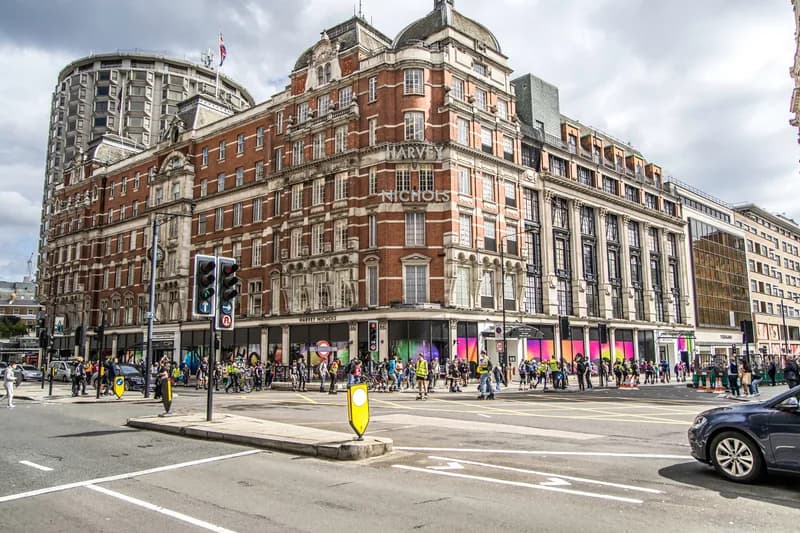
Frasers Group, the London-listed retailer in which Mike Ashley holds about 73 percent, took control of Harvey Nichols on August 13 through a pre-pack administration, moving more than 1,000 staff and six stores across from a luxury chain that had told the market it faced collapse.
FTI Consulting, which the Poon family had appointed in June to run the sale, acted as administrator and transferred Harvey Nichols' operating assets to Frasers while the retailer's debts were left to the insolvency process. The deal covers six UK stores, the online business, existing inventory and international franchise agreements that will keep trading under their current licences.
Days earlier, Harvey Nichols had shown the market how close the end was. Accounts for the year to March 29, 2025, filed at Companies House, were prepared on a non-going-concern basis, meaning directors could not assure auditors the company would survive without a rescue. The retailer had warned it would have to stop trading within a year without new investment, after five consecutive years of losses.
How the deal was done
A pre-pack administration lets a buyer agree terms with administrators before a company formally enters insolvency, then complete the purchase the moment it does. The structure let Frasers buy the trading business while leaving Harvey Nichols' legacy liabilities behind. It kept the shops open and the payroll intact, and it made the rescue financially workable.
The figures behind the sale were bleak. Revenue fell 5 percent to £204.8 million in the year to March 2024, and the pre-tax loss widened to £34 million. In the year to March 29, 2025, revenue dropped again to £184.8 million and the pre-tax loss reached £49 million, the fifth consecutive loss-making year. The after-tax loss was far larger, inflated by a write-off of intercompany loans.
Ashley had been blunt about what he was buying. "If it was a little bit tough before, it is in a death spiral now," he told the Financial Times this month. The FT reported bids coming in below £40 million. Prospective buyers were told they might need to inject £50 million to £60 million to fund a turnaround, and people in the industry expected the real bill to be higher.
Frasers has the balance sheet to carry that cost. The group reported revenue of £5.33 billion for the 52 weeks to April 26, up 8.7 percent, though adjusted pre-tax profit slipped 4 percent. It is also midway through a bid for Hugo Boss: its €38-a-share offer, valuing the shares it did not own at about €1.98 billion, went unconditional after EU clearance, and its stake has risen past 37 percent. Hugo Boss's boards have told shareholders the price is inadequate.
The sale ends 35 years of ownership by Sir Dickson Poon, the Hong Kong businessman whose Dickson Concepts bought Harvey Nichols from the Burton Group in October 1991. He floated the chain on the London Stock Exchange in 1996, then took it private again in 2002. He put the business up for sale this year.
What Frasers is buying
More than 1,000 of about 1,200 UK employees move to Frasers, along with the online business and the existing stock. The estate runs from the Knightsbridge flagship in London, where the chain was founded in 1831, out to Manchester, Birmingham, Bristol, Leeds and Edinburgh. All six will keep trading until further notice.
Frasers also acquired some assets at Harvey Nichols' Dublin store, including stock and fixtures, though it said discussions over that business were continuing. The chain's international franchise stores, part of the transaction, will keep trading under existing licensing arrangements.
One asset stayed outside the deal. The OXO Tower restaurant on London's South Bank, which Harvey Nichols has run since 1996, was sold separately to James Robson, Jack Croft and Will Murray, the team behind Fallow. It sits in a separate company, Harvey Nichols Restaurants.
The contest for control
Frasers was not the only bidder. Poon put the loss-making business up for sale at the end of June and appointed FTI Consulting to weigh a sale or fresh investment. Next was reported to be considering a bid in early July, and Gordon Brothers also bid. Frasers came in later that month over the objections of luxury brands, which had been told at first that it would not be allowed to bid; their concern traced to how Frasers treated suppliers after Matchesfashion collapsed. Frasers is reported to have offered to settle sums owed to Harvey Nichols' brand partners.
The group has received a number of bids and is actively pursuing one or more such bids with a view to concluding a transaction within the going concern period.
The directors added that no offer had been accepted when the accounts were signed off. The accounts were drawn up on a break-up basis.
Poon had begun stepping back well before the sale, leaving the Harvey Nichols board and his other European directorships in the first half of 2026. In July, Hong Kong's Market Misconduct Tribunal found Poon culpable of insider dealing in Dickson Concepts shares in 2019. Sanctions have yet to be decided.
Julia Goddard, who became chief executive in June 2024 after fourteen years at Alexander McQueen, had been spending on a revamp of the Knightsbridge flagship in an attempt to revive the brand. The overhaul did not steady the finances. She stays on under Frasers, and called the deal a strong platform for the next phase of the business.
Adding Harvey Nichols extends a run of purchases that has made Ashley the most prolific buyer of well-known British retail names. His group already owns House of Fraser, Jack Wills and Gieves & Hawkes, and has built up the Flannels chain as it pushes further upmarket.
A hard turnaround ahead
Frasers has not played down the scale of the work. It has said Harvey Nichols will need heavy restructuring and integration into the group, including a review and rationalisation of the store portfolio, the organisational structure, the operating model and the cost base, all aimed at returning the chain to profit.
Why the revival is hard
Frasers has stumbled in luxury before. Its 2023 purchase of the online retailer Matchesfashion, bought for £52 million, collapsed into administration within three months, an outcome that has fuelled questions about whether Harvey Nichols could go the same way. The department store's revival is regarded as one of the hardest in British luxury retail.
Harrods, its nearest rival in London, returned to profit with turnover of £1.08 billion and a pre-tax profit of £84.9 million for the 52 weeks to January 31, 2026.
The wider market offers little help. McKinsey's State of Fashion 2026 report, published in November, forecast low single-digit growth, named tariffs the industry's biggest hurdle and pointed to weaker consumer sentiment. Trade analysts have suggested Knightsbridge and Edinburgh are defensible as luxury locations and that weaker regional shops could be converted to Flannels or House of Fraser. Frasers has confirmed no store plans.
What happens next
Michael Murray, the Frasers chief executive, said the turnaround "will require tough choices, and we are prepared to make those decisions, even if that means a smaller business in the near term, to create a stronger and more sustainable Harvey Nichols for the long term".
The group has said it wants to deepen its relationships with luxury labels including Gucci, Moncler, Burberry, Prada and Dior, part of an "elevation strategy" that has driven its move upmarket. Harvey Nichols would sit near the top of that portfolio, alongside Flannels.
Which of the six shops survive the portfolio review, and how many jobs go with them, has not been settled.
FTI Consulting, which ran the process, said its aim from the outset had been to protect the underlying value of the business and secure a future for the retailer while delivering the best outcome for stakeholders.
Frasers has not said when decisions on individual stores will come, nor how large the eventual business will be. It has committed to folding Harvey Nichols into the group and returning it to profit, but has set no timetable for the restructuring it says is needed.
For now, the immediate threat has passed. A retailer that traces its history to a store opened in Knightsbridge in 1831 has avoided liquidation and the loss of every job tied to it. What its next chapter looks like rests with a buyer who has said the business must shrink before it can recover.
Sources for this article
9 sources · all statements · Retrieved 17 Aug 2026
- 1TheStreet: Historic retailer gets lifeline after warning it could collapse
- 2The Retail Bulletin: Frasers Group acquires Harvey Nichols in pre-pack deal
- 3BM Magazine: Harvey Nichols sold to Frasers Group through pre-pack administration after beating Next
- 4TheIndustry.fashion: What Frasers Group's acquisition of Harvey Nichols means for its luxury ambitions
- 5Retail Gazette: Harvey Nichols warns of collapse risk if no rescue deal is agreed
- 6Retail Gazette: Mike Ashley closes in on Harvey Nichols rescue deal
- 7WWD: Harvey Nichols Warns It Will 'Collapse' Without Rescue as Pre-Pack Sale Nears
- 8Forbes: Frasers Buys Harvey Nichols, Faces One Of Toughest Revivals In Luxury
- 9Edinburgh Evening News: Mike Ashley buys Harvey Nichols from administration in deal including Edinburgh store
More from Threadline News
 BusinessGreenhouse says 2,539 people apply for every 10 job openings7 Aug 2026
 BusinessEli Lilly revenue jumps 48% as Novo Nordisk stumbles6 Aug 2026
 BusinessFord prices Fathom electric pickup at $28,3506 Aug 2026
 BusinessHoneywell Aerospace cuts 2026 forecast, shares fall 21%6 Aug 2026
 BusinessSingapore Exchange lifts dividend 52% on record annual revenue6 Aug 2026
 BusinessHiring slows to 37,000 a month as layoffs hit 1969 low6 Aug 2026
The Numbers
AllOfficial series, each dated to the observation it comes from.
Federal Reserve Bank of St. Louis