US payrolls fell 23,000 in July as revisions erased 103,000 jobs
The unemployment rate edged down to 4.1 percent, and the share of adults in the labor force fell again.
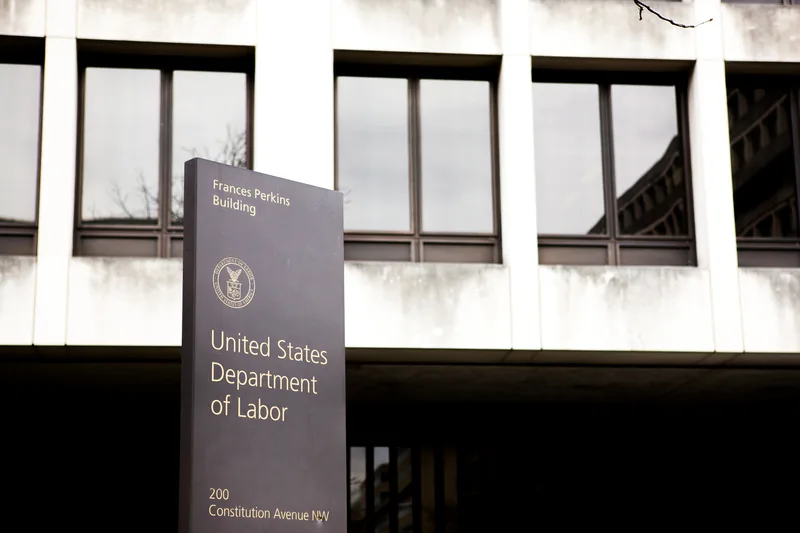
American employers cut 23,000 jobs in July, the Labor Department said on Friday, August 7, and the government also marked down its count of hiring in May and June by a combined 103,000, leaving the job market weaker than it had looked a month ago.
The Bureau of Labor Statistics called both the payroll figure and the unemployment rate, now 4.1 percent, little changed. The plainer reading is that payrolls have now gone from a revised gain of 63,000 in May to a revised 20,000 in June to an outright loss in July.
Over the prior 12 months, monthly payrolls had grown by an average of 34,000. That average is the bar the July number missed, and it is a low bar. A labor market adding an average of 34,000 jobs a month is not far from one adding none, which is why a single negative month matters less here than it would have a few years ago.
Both nonfarm payroll employment (-23,000) and the unemployment rate (4.1 percent) changed little in July, the U.S. Bureau of Labor Statistics reported today.
Where the jobs went
The single largest loss was in local government education, which shed 50,000 jobs after showing little net change over the prior 12 months. That category covers public school staff below the state level, which makes a 50,000 swing in a single month stand out.
Retail trade lost 19,000. Within it, warehouse clubs, supercenters and other general merchandise retailers cut 21,000 and gasoline stations and fuel dealers cut 5,000, while sporting goods, hobby, musical instrument, book and miscellaneous retailers added 10,000. Retail employment had shown little net change over the prior 12 months.
Financial activities kept sliding, down 14,000 on losses in credit intermediation and in insurance carriers. The bureau notes that employment in that sector is now 121,000 below where it stood at a peak in May 2025, which makes it a run rather than a bad month.
| Local government education | down 50,000 |
| Retail trade | down 19,000 |
| Financial activities | down 14,000 |
| Health care | up 22,000 |
| Total nonfarm | down 23,000 |
As filed
Health care was the largest gain, up 22,000, most of it in ambulatory services. Even there the pace slowed: the average monthly gain over the prior year was 36,000. Most other large sectors, including construction, manufacturing and leisure and hospitality, barely moved.
The revisions
May was cut by 66,000, from a reported gain of 129,000 down to 63,000. June was cut by 37,000, from 57,000 down to 20,000. Taken together the two months hold 103,000 fewer jobs than the government said they did when it last published them.
- As previously published
- As revised
Latest · As previously published 57,000 · As revised 20,000
Bureau of Labor Statistics
The bureau explains the mechanism in the release. It builds a first estimate from the businesses that report on time, then adds the ones that report late and recalculates seasonal factors. Revisions of this size are the process working, not a correction of an error, though they leave readers of the first estimate misinformed for a month.
A larger reckoning is already scheduled. On August 28 the bureau will publish the preliminary estimate of its annual benchmark revision, which measures the survey against unemployment insurance tax records that nearly all employers must file. The final version lands with the January 2027 report.
What the household survey shows
The unemployment rate edged down to 4.1 percent from 4.2 percent in June, with 6.9 million people counted as unemployed. Rates fell for teenagers, to 12.1 percent, and for Hispanic workers, to 4.6 percent. Rates for adult men, adult women and White, Black and Asian workers showed little or no change.
The share of adults in the labor force was 61.4 percent and the share with a job was 58.9 percent. Both are lower than in January, by 0.7 and 0.5 percentage points. A shrinking labor force can hold the unemployment rate down without anyone finding work.
One number moved sharply. The count of people on temporary layoff rose by 153,000 to 921,000. Permanent job losers were little changed at 1.7 million. On the face of it that is employers reaching for the reversible option, though a temporary layoff can become a permanent one.
The long-term unemployed, meaning those out of work 27 weeks or more, edged down to 1.8 million but still made up 25.5 percent of everyone unemployed. Roughly one in four people looking for work has been looking for at least half a year.
Another 4.8 million were working part time because their hours were cut or they could not find full-time work. A further 5.9 million wanted a job but were not counted as unemployed because they had not looked recently, among them 476,000 who had given up believing a job was there.
Some of the detail cuts the other way. The number of people jobless for less than five weeks edged down to 2.0 million and is 344,000 lower than a year ago, which is not what a wave of fresh layoffs looks like. The 1.8 million counted as marginally attached to the labor force also held steady.
Pay and hours
Average hourly earnings for private workers rose 2 cents to $37.62, and are up 3.2 percent over the year. For production and nonsupervisory workers, the group that excludes managers, pay rose 4 cents to $32.40. Annual pay growth of 3.2 percent is slower than the 3.7 percent rate at which the Fed's preferred inflation gauge was running in June.
Hours did not move. The average private workweek stayed at 34.3 hours and the manufacturing week at 40.4, though factory overtime slipped by a tenth of an hour to 3.1. Cuts to hours often show up before cuts to headcount, and this month they did not.
What it changes
The report landed on a central bank that had spent the week discussing whether to raise rates, not cut them, because inflation is still running above target. Futures markets immediately cut the odds of an increase at the September meeting from better than even to worse than even, though nobody at the Fed has taken a rise off the table.
While the July report and the downward revisions to prior months put a dent in the idea that the labor market is stable, recall that Fed officials have in recent months indicated that they think the breakeven pace of job gains is fairly low
Stocks rose anyway. The S&P 500 closed up 0.62 percent at 7,757.64 and the Nasdaq composite gained 1.30 percent, moves consistent with traders pricing a lower chance of tighter policy. Gold closed up 2.33 percent.
Not every forecaster read the report as a turn. Several argued that Fed officials have already set a low bar for what counts as adequate job growth.
Two cautions belong on any single month. The payroll and unemployment figures come from different surveys, one of employers and one of households, and they disagree regularly. The household survey is drawn from a far smaller sample than the payroll survey, so a single month of movement in it carries a wide margin of error.
Consumer price figures are due the week of August 10, and several forecasters argued on August 7 that those will decide September rather than this report. The August employment report is scheduled for September 4, eleven days before the rate decision on September 15 and 16.
Sources for this article
3 sources
More from Threadline News
 BusinessHoneywell Aerospace cuts 2026 forecast, shares fall 21%6 Aug 2026
 BusinessSingapore Exchange lifts dividend 52% on record annual revenue6 Aug 2026
 WorldA dead SpaceX rocket hit the moon and joined 209 tons of junk10 Aug 2026
 HealthFDA approves the first mRNA flu shot after refusing to review it10 Aug 2026
 PoliticsFCC chair took $75,000 in gala tickets from a company he regulates10 Aug 2026
 EntertainmentParamount and Warner Bros merger heads to trial in March 20278 Aug 2026
The Numbers
AllOfficial series, each dated to the observation it comes from.
Federal Reserve Bank of St. Louis