Paramount and Warner Bros merger heads to trial in March 2027
The delay triggers a fee of about $7 million a day from October, more than $1 billion by trial.
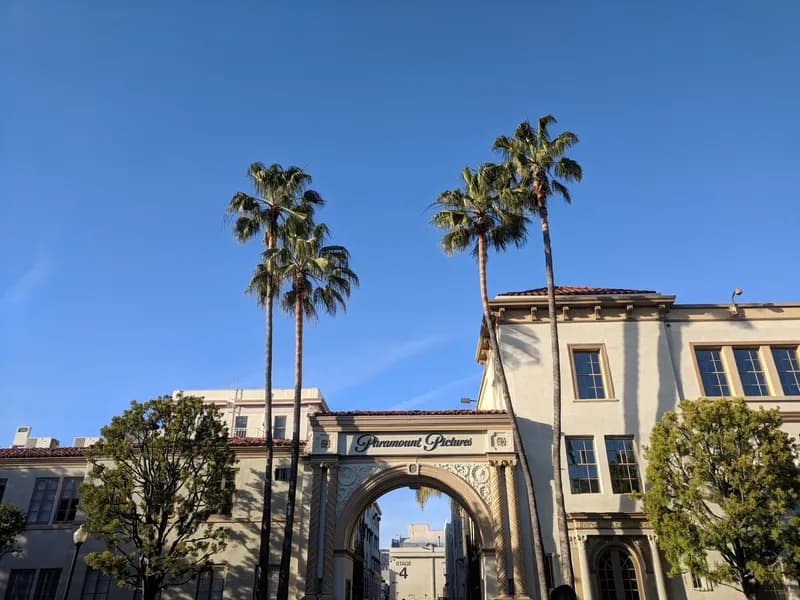
The merger that would fold Warner Bros Discovery into Paramount is going to trial, and not soon. A federal judge in California set the antitrust case down for 12 court days beginning on March 2, 2027, which leaves one of the largest media deals ever attempted unresolved for another seven months.
Waiting is not free. Under the merger agreement Paramount must start paying Warner Bros Discovery shareholders a fee of about $7 million a day from October 1 for as long as the deal remains unclosed. By the time the trial opens that runs to roughly $1.06 billion, before a judge has ruled on anything.
Published figures for the deal itself vary. TheWrap and CBS News put it at about $110 billion, while Quartz reported the acquisition at $81 billion. Either figure describes the same transaction, which would join two of the largest film and television companies in the United States.
I believe this fight is not really about market share
What the judge ordered
Judge Araceli Martínez-Olguín set out the schedule in a filing on August 4. The order runs the trial across 12 court days from March 2 to March 19, 2027, dark on March 8 and 15 to fit the court's calendar, with trial days from 8:30 in the morning to 1:30 in the afternoon and two short breaks. Some coverage of the order gave the end date as March 15.
Neither side got what it asked for. Paramount had pushed for a 12 day trial starting on November 4 of this year, arguing speed. The state attorneys general and the Writers Guild of America wanted at least 12 to 15 days starting on April 5, 2027, saying they needed time to gather evidence.
The parties agreed to cancel a preliminary injunction hearing that had been set for August 3 and go to a full trial instead. Paramount also committed to holding the deal in place until five days after the trial's outcome, or June 1, 2027, whichever comes first.
| Joint case management statement due | August 13, 2026 |
| Case management hearing | August 19, 2026 |
| Daily fee to shareholders begins | October 1, 2026 |
| Final pretrial conference | February 24, 2027 |
| Trial | March 2 to March 19, 2027 |
As filed
The court also nudged both sides toward talking. It asked them to name at least two candidates for a magistrate judge who could preside over a settlement conference. CNN reported on August 4 that there was no sign such talks had begun.
The cost of the delay
The daily fee is not a penalty imposed by the court. It is written into the merger agreement as 25 cents per share per quarter, payable from October 1, and it works out at roughly $650 million a quarter. It exists to compensate Warner Bros Discovery shareholders for money tied up while a deal drags.
Bigger numbers sit behind it. The agreement sets an outside date of March 4, 2027, with an automatic extension to June 4, 2027, if everything except regulatory approvals and governmental orders has been settled. If the deal collapses over regulatory matters, Paramount owes Warner Bros Discovery a termination fee of $7 billion.
Paramount is behaving as though it will still happen. Reporting second quarter revenue of $6.91 billion, up 1 percent on a year earlier, the company said it fully expects the transaction to close. Its spokesperson said the transaction is "lawful, pro-competitive, and raises no antitrust concerns" and that the company remains committed to closing as soon as possible.
What the states are arguing
Twelve state attorneys general, led by California's Rob Bonta, sued in mid July. So, separately, did the Writers Guild of America. The states argue the deal violates the Clayton Act of 1914, the law that bars mergers likely to lessen competition or tend to create a monopoly.
Their central claim is about concentration. A combined company, they say, would control roughly a third of wide release theatrical film distribution and close to a third of basic cable programming in the United States, though CBS News, citing Bonta's office, put the film share higher at more than a third. They also argue it would push down pay for actors and writers and narrow what audiences can choose from.
We appreciate the court's attention to this case and look forward continuing to argue our case and blocking this unlawful merger
The Writers Guild's separate challenge makes the labor argument directly, saying the merger would suppress writers' pay and push the combined company toward more uniform programming. Granting the states a restraining order last month, the judge wrote that they had presented compelling evidence on theatrical market share.
Ellison has framed the case as something else. In an opinion piece published on August 4 he argued the dispute is not really an antitrust one, writing that the issue is "whether I can be trusted as a steward of Warner's CNN." Bonta's office rejected that, calling it a clear-cut antitrust case.
The two framings are not as separate as they look. The states' complaint, as CBS News reported it, argues the merger would harm consumers by limiting their news and entertainment options, which puts the range of available news inside the competition claim rather than outside it.
Everyone else has said yes
What is unusual is the split between the regulators and the courts. The Justice Department cleared the deal. Warner Bros Discovery shareholders approved it. The European Commission cleared it subject to conditions, including an exit from the international distribution joint venture United International Pictures.
Clearances or expired waiting periods have also come from Australia, Austria, Brazil, Canada, China, Kuwait, Saudi Arabia, Serbia, South Africa, Ukraine, Montenegro, New Zealand and North Macedonia, along with foreign investment authorities in eight European countries.
Britain settled its part on August 6. The Competition and Markets Authority cleared the deal at the first phase of review rather than opening a deeper investigation, and the culture department, which had said it was minded to intervene over whether enough plurality would remain in news media, took an undertaking from Paramount instead. That leaves the Federal Communications Commission review of foreign investment as the last one open.
The people waiting
For staff the delay is the story. Los Angeles County's Department of Economic Opportunity estimated in June that a completed merger would put about 2,495 jobs at risk in the county and around 6,000 worldwide, concentrated in corporate, technology, real estate and other shared functions. The department said the figure should not be read as a layoff forecast.
That leaves thousands of people waiting to learn whether their job survives a deal that will not close for at least seven months. The Hollywood Reporter has described staff at both companies as being in limbo, with the delay giving anyone who can move an incentive to move.
The lawsuit against us has no basis in fact, economics or antitrust law.
A negotiated end remains possible. Nothing in the schedule prevents an agreement before March.
If no settlement comes, the arithmetic gets uncomfortable. Every month of delay adds about $210 million in fees, the outside date of March 4 falls in the trial's first week, and the extension to June 2027 only holds if every condition except regulatory approvals and governmental orders has been met.
For anyone who watches films or pays for cable, the case is about how many companies decide what gets made. That question now has a date on it, and the date is seven months away.
Sources for this article
3 sources · all statements
- 1TheWrap, Paramount-Warner Bros. Merger Antitrust Trial Set for March 2027By Lucas Manfredi, 4 August 2026
- 2Quartz, Paramount-Warner Bros. merger antitrust trial set for March 2027By Cris Tolomia, 5 August 2026, source of the Ellison comments
- 3CBS News, Judge temporarily halts Paramount-Warner Bros. Discovery mergerBy Mary Cunningham, updated 23 July 2026
More from Threadline News
 BusinessSweetgreen cuts 2026 sales outlook on cyclospora outbreak fears7 Aug 2026
 WorldColombia's new president declares talks with armed groups over7 Aug 2026
 PoliticsTrump narrows birthright citizenship in two new orders7 Aug 2026
 HealthHead Start rule strips federal standards and adds new mandates7 Aug 2026
 BusinessGreenhouse says 2,539 people apply for every 10 job openings7 Aug 2026
 PoliticsOhio's two GOP senators urge Max Miller to resign7 Aug 2026
The Numbers
AllOfficial series, each dated to the month it covers.
Federal Reserve Bank of St. Louis