Colombia's strongest quake this century kills at least 190, government says
A magnitude 7.4 tremor flattened buildings across the west, with the epicenter still unreachable.
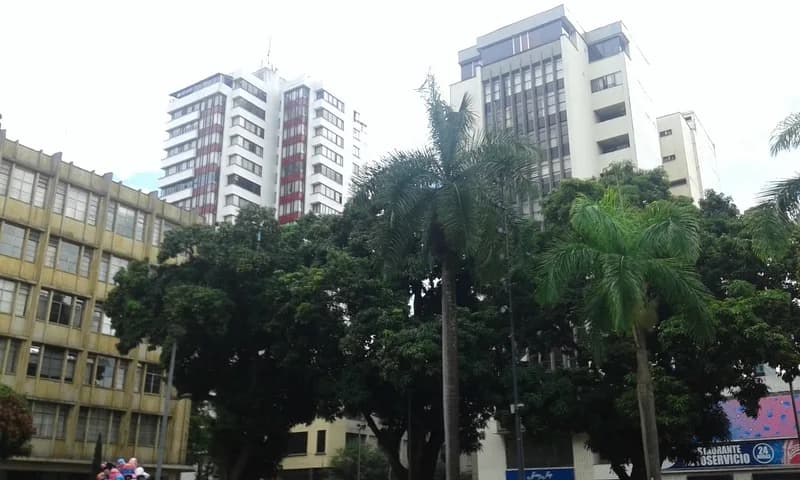
A magnitude 7.4 earthquake tore through western Colombia on Monday 10 August 2026, collapsing hospitals, schools and apartment blocks across five cities. The Colombian government said at least 190 people had been killed and 2,595 injured by Tuesday night, with 195 officially listed as missing and thousands more names logged on civilian-run databases.
The quake struck near San José del Palmar, a community of about 4,800 people in the Chocó region about 150 miles west of Bogotá, at a depth of 66 miles, the U.S. Geological Survey said. At least 21 aftershocks followed within hours, and the count had passed 70 by Tuesday, the Colombian Geological Service said, calling it the largest seismic event recorded in the country this century.
Death tolls climbed through Monday and into Tuesday as rescuers reached more sites, and the counts diverged sharply depending on who was doing the counting. The government's national figure reached at least 190 by Tuesday night, up from 181 at midday, and the national medical examiner's office said it had received 160 bodies. Colombia's Public Ministry put the toll at 224, and a Reuters tally of individual city reports reached 254, including 101 dead in Pereira and 95 in Cali, figures that between them already exceed the national count. De la Espriella said on Tuesday that 2,595 people had been injured, more than 1,100 homes destroyed and about 8,300 damaged.
Five cities under alert
Pereira, Cali, Quibdó, Manizales and Armenia remain under Colombia's highest disaster threat level, a red alert declared by municipal and departmental authorities and relayed by Asocapitales, the association of the country's capital cities. Cali's mayor, Alejandro Eder, said on Monday morning that at least 20 buildings had collapsed in the city, some with people still trapped inside; by Tuesday his count had risen to 45. Most of Pereira lost power, with about 75 percent restored by Monday night and some districts deliberately kept dark for rescue safety.
Among the wrecked buildings were hospitals in Cali, where the pediatric and neonatal sections of one gave way and trapped patients, the local governor said.
The disaster struck Cali, Colombia's third-largest city and a hub of about two million people known for salsa dancing. The Petronio Álvarez festival of Afro-Pacific music, due to open in the city on Wednesday and expected to draw hundreds of thousands, was suspended by Eder on Monday before it began.
By Tuesday morning, Cali's public health secretary, Germán Escobar, said the city's morgue was full and authorities were bringing more bodies off the streets. De la Espriella said on Monday night that 188 people were still listed as missing in Cali; by Tuesday morning Eder put the number rescued in the city at 86.
A new president's first test
The earthquake landed on an administration only days old. Abelardo de la Espriella had been sworn in as president on Friday 7 August 2026, in Cali rather than Bogotá, and by Monday afternoon, memories still fresh of twin earthquakes in neighboring Venezuela in June, he declared a national state of emergency to speed funding for the response. He said the first priority was rescuing people buried under collapsed buildings.
We aren't going to leave people alone. They are in our hearts and we are going to tend to people with our full determination.
De la Espriella traveled to Pereira, capital of the coffee-growing Risaralda region, on Tuesday, where he decreed a three-month economic relief measure for residents. 'It broke my heart going through the city center and seeing all these businesses destroyed,' he said, adding that he hoped the measures would be 'a breath of air in the middle of this tragedy.'
Speaking in Quibdó on Monday night, the president said the government had mobilized the 'entire military and police apparatus.' More than 1,000 security officers were to deploy across the affected provinces to keep order after reports of looting, and overnight curfews in Cali and Pereira cleared space for rescue work.
Where the toll may rise
The gravest uncertainty lies at the epicenter. Rescuers had still not reached the area around San José del Palmar by Tuesday because road damage and landslides cut it off, raising fears that the toll in rural Chocó, reachable in much of it only by boat or plane, could be far higher than reported.
| Homes damaged | Nearly 5,000 |
| Homes destroyed | 387 |
| Buildings collapsed | 61 |
| Schools affected | 550+ |
| Health facilities affected | 24 |
| Community centers affected | 350+ |
As filed
The number of missing has been hard to pin down. Residents began logging missing loved ones in online databases on Monday, and one had recorded more than 2,000 names by late that afternoon, mostly in Cali and Pereira. De la Espriella put the official missing count at 195 on Tuesday, while the civilian-run databases had grown to closer to 4,000 names.
Among the dead was Mateo Valencia, the six-year-old son of the mayor of Bahía Solano, a beach town near the epicenter.
Aid arrives from abroad
The United States announced $15.5 million in emergency assistance for shelter, food and other relief. Secretary of State Marco Rubio said the Trump administration was 'closely monitoring' the earthquake and stood ready to support the people of Colombia and de la Espriella's administration.
The European Union activated its Copernicus satellite service to support rescue teams. The presidents of El Salvador and Mexico, Nayib Bukele and Claudia Sheinbaum, said they were ready to assist if asked, echoing their countries' roles after twin earthquakes struck neighboring Venezuela in June. The Colombian pop star Shakira was among the artists who posted messages of solidarity.
The Colombian Red Cross activated its National Crisis Room and sent search-and-rescue teams from Antioquia, Quindío and Caldas, with 30 responders from Antioquia deployed to Chocó, the International Federation of Red Cross and Red Crescent Societies said. Direct Relief, a U.S. aid group, said it was assembling medicines, wound-care and surgical supplies. Colombia was already on the International Rescue Committee's 2026 emergency watchlist over internal conflict that continues to displace communities.
Colombia's coffee heartland hit
Much of the destruction fell on the Eje Cafetero, the coffee-growing region whose cultural landscape UNESCO recognizes and that takes in Manizales, Pereira and Armenia. Colombia is the world's third-largest coffee producer, supplying about 7 percent of the world's beans, and the quake battered its heart.
The region has known disaster before. The 1999 Armenia earthquake, about magnitude 6.1, killed 1,185 people and destroyed or left uninhabitable 35,972 homes. That quake was weaker and much shallower than this one, at a depth of about 17 kilometres, and it killed several times as many people.
Response strains and gaps
Seven airports suspended operations, in Armenia, Cali, Manizales, Pereira, Quibdó, Buenaventura and Cartago, cutting air links to some of the worst-hit areas. Roads, aqueducts, energy and telecommunications went down where the shaking was strongest. Three hospitals collapsed and 18 more were damaged, along with 39 schools, the president said.
Deploying help across the region drew forces from several cities. Bogotá's mayor, Carlos Fernando Galán, sent an initial contingent of 62 firefighters and two dogs, with more than 100 rescuers going to Cali and Pereira in total. By Monday night de la Espriella said 228 rescuers and 105 military engineers were working in Cali, while in Medellín more than 260 firefighters and 40 structural engineers inspected that city's own buildings for damage.
About 600 troops had been deployed to Cali by Monday evening, Eder said, with another 400 to 500 expected overnight and 232 more requested. In Pereira, rescuers used a crane to lift sections of a collapsed multi-storey building at Plaza de Bolívar, and residents were told to stay away from Los Nevados Clinic, San Jorge Hospital and Comfamiliar Clinic, which had been overwhelmed with casualties.
Jose Gallego, a Colombian social-media influencer, had just landed at Pereira's airport and was recording live video when the quake hit, capturing the violent shaking as he crouched under a table and part of the ceiling fell. 'There were people injured, bleeding, screaming and trying to reach their families but there wasn't any signal,' he said.
Days of searching ahead
Rescue operations and damage assessments continued into Tuesday, with the fate of thousands still unknown and the rural communities near the epicenter yet to be reached. Colombia had made no formal request for international assistance, but Jens Laerke, a spokesman for the UN humanitarian office, said that if it did, 'the entire UN system and, of course, humanitarians in particular stand ready to support with everything we've got.'
Sources for this article
12 sources · Retrieved 12 Aug 2026
- 1NBC News: More than 160 killed in Colombia's strongest earthquake in years
- 2ABC News: At least 224 dead in Colombia earthquake
- 3NPR: Magnitude 7.4 quake rocks western Colombia
- 4Al Jazeera: Colombia declares emergency after magnitude 7.4 earthquake
- 5CNN live coverage, Aug. 10
- 6CNN live coverage, Aug. 11
- 7Al Jazeera: Frantic search as over 2,700 reported missing
- 8CNBC: Colombia quake death toll tops 250
- 9UN News: Colombia earthquake, UN joins national response
- 10Daily Caller: At least 169 dead as 7.4 magnitude earthquake rocks Colombia
- 11Direct Relief: Mobilizing medical aid for Colombia
- 12IFRC: Colombia earthquake update, Red Cross response ongoing
More from Threadline News
 PoliticsThe National Guard is booked in Washington until January 202912 Aug 2026
 EntertainmentThe film Warner Bros wrote off for taxes opens in theaters August 2812 Aug 2026
 PoliticsThe DC troop fight runs on crime numbers the city cannot vouch for12 Aug 2026
 EntertainmentThe Michael Jackson biopic hit $1 billion with critics against it11 Aug 2026
 HealthFDA approves the first mRNA flu shot after refusing to review it10 Aug 2026
 PoliticsFCC chair took $75,000 in gala tickets from a company he regulates10 Aug 2026
The Numbers
AllOfficial series, each dated to the observation it comes from.
Federal Reserve Bank of St. Louis