France's top court strikes down under-15 social media ban
The Constitutional Council ruled the measure disproportionately restricts free speech, forcing Macron to redraft it.
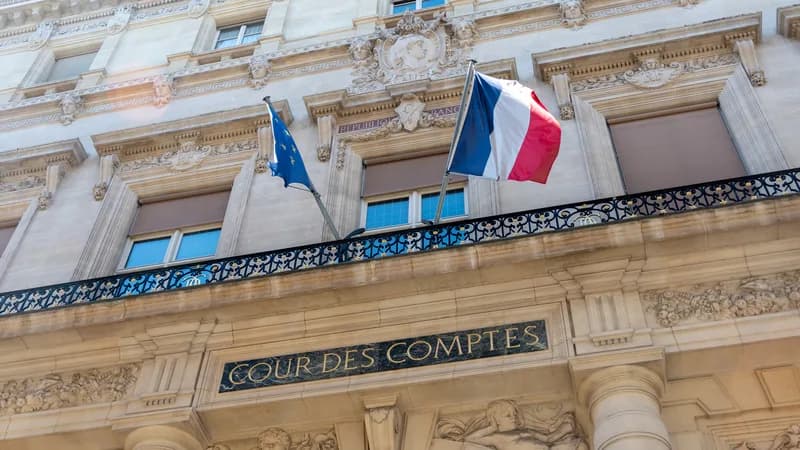
France's highest court struck down a law that would have barred children under 15 from social media, ruling on Friday that it went too far in restricting free speech and left age checks undefined.
The Constitutional Council, France's top constitutional authority, issued the decision only weeks after both chambers of Parliament had voted overwhelmingly for the bill, which President Emmanuel Macron had championed and pushed to fast-track. It would have made France the first country in the European Union to impose such an age limit, a status the government had held up as evidence of its resolve on children's safety online.
The court's objection was two-fold. It found the ban swept too broadly to weigh the situation of each minor or the specific risks of each platform, and it created a privacy problem because enforcement would require every user, including adults, to prove their age before logging on.
What the court ruled
In its ruling, the Council found that Article 1 of the law "constitutes an infringement that is neither appropriate, necessary, nor proportionate" to the free expression of people under 15. Judges said the aim of protecting children was legitimate, but that the drafting failed the test the constitution sets.
The privacy point turned on age verification. To keep under-15s off the platforms, the law would have required every user, adults included, to prove their age before logging on. But it did not spell out how that proof would be given or what limits would apply, and the court said that gap left it without the legal safeguards the constitution requires for handling personal data.
Under the bill as passed, children younger than 15 would have been blocked from opening social media accounts from September 1, and existing accounts held by younger users would have been closed within four months, by January 1, 2027. The law also barred mobile phones in secondary schools, extending a ban that has covered French primary and middle schools since 2018.
A blow to Macron
Macron had made the ban one of the flagship measures of his final years in office, personally pushing lawmakers to fast-track it.
The government had wanted the change in force from September, but the bill first faced a mandatory review by the Council to check that it complied with the constitution. That review is what struck it down before a single account could be closed.
Following the decision, Macron directed Prime Minister Sébastien Lecornu to rework the legislation, according to a statement from the Élysée Palace. He asked for a legally sound draft that takes account of both the Council's decision and the European legal framework, and he underlined that he still wants the ban in place.
The Élysée said Macron "remains fully committed to bringing this reform to fruition by spring 2027," when his presidency ends.
The 2027 deadline
Spring 2027 is when France holds its next presidential election and when Macron leaves office. He is barred by the constitution from seeking a third consecutive term, so any redrafted ban would have to clear Parliament and survive review before his mandate runs out.
The president has warned repeatedly about screen time among young people. In April he publicly urged teenagers to switch off their devices and read books in order to become better citizens, part of a wider push on children's digital safety that the banned law was meant to anchor.
By prohibiting minors under the age of fifteen from accessing certain online services, the law inherently requires every person, even an adult, to prove their age before accessing them.
The Council went on to say that because the law failed to set out the conditions under which such proof must be provided, lawmakers had not built the safeguards needed to protect the requirement. That tied the free-speech and privacy problems into one flaw, and it is the flaw a new bill will have to fix.
On the same day, the Council upheld in full a separate law granting adults with an incurable condition the right to assisted dying, while ruling that some of its provisions required clarification.
The ruling does not bar France from trying again. It requires new legislation to be drafted, and Macron's office has said he intends to press ahead rather than abandon the policy entirely.
Where other countries stand
France's attempt followed Australia, which in December became the first country to bar under-16s from platforms including Facebook, TikTok, Twitch and YouTube. That law has also drawn legal challenges from social media companies.
Britain's government announced similar restrictions in June, and its Parliament is expected to vote on the proposals. Governments elsewhere have been weighing whether to follow Australia, whose measure took effect in December and remains the model others cite.
What happens next in France
Lecornu now has to produce a version that can survive the same review. The court effectively set out what a workable law would need, namely a narrower reach that weighs individual minors and specific platforms, and a defined method of age verification that protects users' data. Neither is simple, and the age-check problem has stalled similar laws elsewhere.
The President has instructed the Prime Minister to work, as soon as possible, on drafting legally sound legislation that takes into account the Constitutional Council's decision as well as the European framework.
The statement pointed to the European legal framework as well as the Council's ruling, and Macron asked for legislation that is legally sound rather than a simple re-passage of the old text.
The wider fight over minors
The debate over children and social media is being fought in courtrooms too. A trial was beginning in Oakland, California, over claims brought by 29 US states accusing Meta of harming minors, according to reporting on the French ruling.
Bloomberg described the French push as part of a broader reckoning that includes concern over phone addiction and a wave of lawsuits against big technology companies.
The ban was among the last major measures adopted under Macron's presidency, which ends next year. He had signaled support for it on several occasions and, in a July post marking its passage, said social media would be banned for under-15s from the start of the school year. That timeline is now gone.
Macron's office did not say when a new bill would be introduced or how it would resolve the age-check problem that sank the first attempt. New legislation will have to be drafted before any ban can take effect.
What is still unclear
For now, French children under 15 face no legal bar to social media, and the September start the government wanted is off the table. Whether a rewritten measure can meet the court's terms before Macron leaves office in 2027 remains an open question.
Sources for this article
9 sources · all documents · Retrieved 14 Aug 2026
- 1France 24: France's constitutional authority strikes down social media ban for under-15s
- 2CNN: France's top court blocks bill banning social media for under-15s
- 3Bloomberg: French Top Court Blocks Social Media Ban for Young Teens
- 4RTE: France's top court blocks social media ban for under 15s
- 5Engadget: France's top court strikes down social media ban for children under 15
- 6The Epoch Times: Top French Court Blocks Macron-Backed Social Media Ban for Under-15s
- 7TimesLIVE: France's top court blocks social media ban for under-15s
- 8CP24: France's top court blocks bill banning social media for under-15s
- 9Sahara Reporters: France Top Court Stops Macron's Social Media Ban For Under-15s
More from Threadline News
 WorldMexico sends 1,500 troops to Michoacan after avocado inspection halt7 Aug 2026
 WorldCeuta leader says 100 died as 78,000 migrants crossed from Morocco6 Aug 2026
 WorldUkraine strikes Yaroslavl and Ufa oil refineries deep in Russia6 Aug 2026
 BusinessJapan orders over 218,000 to evacuate as Chiba rain turns deadly13 Aug 2026
 PoliticsThe National Guard is booked in Washington until January 202912 Aug 2026
 EntertainmentThe film Warner Bros wrote off for taxes opens in theaters August 2812 Aug 2026
The Numbers
AllOfficial series, each dated to the observation it comes from.
Federal Reserve Bank of St. Louis