Jason Arday, Cambridge's youngest Black professor, found dead at 41
Arday was found dead nine days after resigning from Cambridge amid plagiarism allegations.
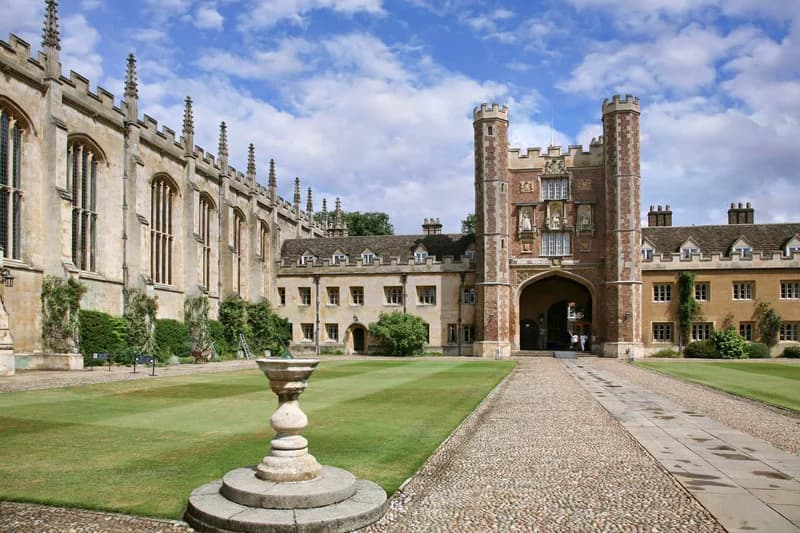
Jason Arday, who in 2023 became the youngest Black professor in the history of the University of Cambridge, was found dead at an address in Battersea, south London, on Friday, nine days after resigning amid plagiarism allegations.
The campaign of misinformation was too much for Jason, who was a gentle man and who always wanted to see the best in everyone.
London's Metropolitan Police said officers were called by the London Ambulance Service at 3.12 p.m. and that a 41-year-old man was pronounced dead at the scene. His next of kin have been informed and are being supported by officers, the force said, adding that the death was being treated as unexpected but not believed to be suspicious. The case is being investigated by the Met's Central South Command Unit and a file will be prepared for the coroner. No cause of death has been established and no inquest has opened.
From appointment to resignation
He held the post of professor of sociology of education and was a fellow of Jesus College. Until last month he was a celebrated public figure, and his fall from that standing was swift, unfolding over a matter of weeks.
Questions about Arday's work were first raised publicly by Nathan Cofnas, who ran the thesis through plagiarism-detection software and published the results. Cofnas is a self-described race realist who was dismissed by Cambridge's Emmanuel College in 2024 over a blog post arguing that Black people are less intelligent; he sued, and a county court found this year that his beliefs were protected but their expression objectionable. On July 24 The Times of London and The Telegraph each published an analysis of Arday's 2015 doctoral thesis, saying it contained passages identical or near-identical to earlier work.
| 2023 | Appointed Cambridge's youngest Black professor |
| July 24, 2026 | Times publishes thesis analysis |
| August 5, 2026 | Arday resigns from Cambridge |
| August 14, 2026 | Found dead in Battersea, south London |
As filed
Arday resigned on August 5 as professor and as a fellow of Jesus College, hours after Cambridge announced its investigation. He denied the plagiarism allegations, saying his decision to step down should not be read as an admission of guilt, and said in a personal statement that he wanted to reclaim some peace, some privacy and some semblance of an ordinary life.
Cambridge's shifting response
Cambridge at first dismissed the plagiarism claims, calling the effort a vile campaign to undermine his credibility, on the grounds that they had already been investigated by Liverpool John Moores University, the institution that awarded Arday's doctorate in 2015. Liverpool John Moores did not uphold the allegations, attributing what it found to honest and reasonable error. No institution has upheld a finding of plagiarism against him.
The university then reversed course. It said it had opened an investigation following new information about Arday's qualifications and honorary appointments, and that the continuing complaints about alleged academic misconduct were being handled separately, in line with its Misconduct in Research policy.
The University of Glasgow, where Arday was professor of sociology of education from January 2022 to March 2023, commissioned a review of his appointment there rather than of his research. Durham University is reviewing his appointment too. Dozens of Cambridge academics signed a letter calling for an independent inquiry into how he was appointed, and the university's vice-chancellor, Professor Deborah Prentice, said she shared those concerns and would review how Cambridge hires senior staff.
After his death, Prentice said the university was "desperately saddened to hear this tragic news" and offered its sympathies to Arday's family and friends. Cambridge has said it continued to provide support to him throughout the weeks of scrutiny that followed the first reports.
Beyond the thesis
Scrutiny extended past the thesis to Arday's account of his own life. British media questioned his claim to have raised 5.5 million pounds, about $7.4 million, for charity through feats such as running 30 marathons in 35 days and 600 miles in six days.
He said the 600-mile run had in fact taken 12 days, including rest days, twice the six he had claimed, and that the fundraising was done through a syndicate of about 100 people whom he said non-disclosure agreements prevented him from naming. In an earlier interview with The Times, Arday said he held himself accountable and that other people should hold him accountable, and added, "We're talking about academia here. I didn't murder somebody."
His death came the same week as the release of a memoir, "Great and Unfortunate Things," written with Eve Claxton, which Simon & Schuster had decided to publish despite the doubts about his credibility. The book was released in the United States on August 11 and was set to be published in the United Kingdom on August 27.
During the weeks of scrutiny, Arday alleged that the campaign against him was racially motivated. Reporting also questioned accounts of his childhood and personal life, and his supporters said that his autism diagnosis, made when he was a boy, had left him vulnerable throughout the process.
Arday became the focus of hundreds of articles in the British and international press, many doubting his credibility and, in the words of one account, denigrating his character. Investigative pieces appeared in The Times, The Guardian and The Telegraph, and the BBC and Sky News were among the outlets reporting on his death.
The final hours
Sir Simon Baron-Cohen, a Cambridge professor and director of the university's Autism Research Centre, told the BBC he had been in touch with Arday on the Friday morning. Arday was not coping with the loss of his career and his reputation, Baron-Cohen said, and "felt he couldn't go on," words he said Arday had used himself in voice notes. He described Arday as a man who was vulnerable as a child, a teenager and an adult, and who "needed and deserved safeguarding and support," subjected in his final weeks to relentless scrutiny that included ridicule.
Many commentators questioned the intensity of the coverage, arguing that Arday's case had drawn far more attention than that of other academics accused of plagiarism. The writer Ash Sarkar wrote on X that Arday "wasn't the first academic to be accused of plagiarism at Cambridge," but was "the first where those things became a front-page story, across multiple papers, for days and days."
Calls for reflection
Britain's prime minister, Andy Burnham, called for reflection on Saturday, August 15, describing the situation as "a tragedy on so many levels" and urging against "rushing to judgment."
The education secretary, Lucy Powell, said she was "deeply shocked and saddened," and urged people to give the family privacy and "to remember there are real people with loved ones involved." Sir Patrick Vernon, the Windrush campaigner, started a GoFundMe page to help cover funeral, memorial and associated family costs.
The scale of the scrutiny
Anti-racism campaigners argued that the intensity of the coverage reflected systemic bias against Black academics in British institutions. Many of those paying tribute said his treatment had been disproportionate, and some called it racist. The allegations had been taken up by right-wing newspapers and commentators, who said he had unfairly benefited from diversity policies.
The Telegraph reported that more than 100 passages in Arday's doctoral thesis resembled a 2009 doctoral thesis by Paula Zwozdiak-Myers, then a student at Brunel University London, whom Arday's thesis cites 17 times. Cofnas said passages had been lifted with minimal editing, in some cases keeping copyediting mistakes from the original source. The Guardian reported on the alleged plagiarism alongside what it described as discrepancies in his account of his own life. Arday denied plagiarism throughout while accepting he had made mistakes.
Arday's family said they were in shock to have lost "this amazing father, partner, brother, uncle and son," and that for more than three years he had been subjected to a campaign of sustained abuse by those who "would leave no stone unturned in their quest to undermine him." They asked the press to leave them alone and to stop what they called the campaign of harassment against Arday and his family.
News of the death brought widespread shock, and many of those paying tribute argued that the treatment Arday received had been out of proportion to the accusations against him.
What remains unresolved
Cambridge's independent investigation into Arday's appointment, and the reviews at Glasgow and Durham, had not concluded at the time of his death, and the university has said the misconduct complaints were being handled under a separate process. No institution upheld a finding of plagiarism against him. The Metropolitan Police said the case had been passed to its Central South Command Unit and that a file would be prepared for the coroner. No cause of death has been given. If you are struggling, the Samaritans can be reached free at any hour on 116 123 in the UK and Ireland, or at jo@samaritans.org. CALM is on 0800 58 58 58 from 5 p.m. to midnight daily, and Shout offers text support at 85258. In the United States, the Suicide and Crisis Lifeline is 988.
Sources for this article
8 sources · all documents · Retrieved 16 Aug 2026
- 1ABC News: Former Cambridge professor Jason Arday found dead amid plagiarism allegations
- 2Al Jazeera: Jason Arday, former Cambridge professor accused of plagiarism, found dead
- 3NBC News: Jason Arday, ex-Cambridge professor accused of plagiarism, found dead a week after resigning
- 4NPR: Jason Arday, Cambridge professor accused of plagiarism, is found dead
- 5CNN: Cambridge professor found dead after scrutiny over academic record faced 'sustained abuse,' family say
- 6The Daily Beast: Youngest Black Professor Jason Arday's Plagiarism Scandal Takes Tragic Twist
- 7The Washington Times: U.K.'s leader calls for reflection after death of former Cambridge professor accused of plagiarism
- 8Euronews: Deceased academic Jason Arday's family decries 'campaign of harassment' against him
More from Threadline News
 WorldColombia's new president declares talks with armed groups over8 Aug 2026
 WorldMexico sends 1,500 troops to Michoacan after avocado inspection halt7 Aug 2026
 WorldCeuta leader says 100 died as 78,000 migrants crossed from Morocco6 Aug 2026
 WorldUkraine strikes Yaroslavl and Ufa oil refineries deep in Russia6 Aug 2026
 BusinessCourt filings tie Anthropic's book purchases to AI training16 Aug 2026
 BusinessJapan orders over 218,000 to evacuate as Chiba rain turns deadly13 Aug 2026
The Numbers
AllOfficial series, each dated to the observation it comes from.
Federal Reserve Bank of St. Louis